By Rev. Chris Brouillard-Coyle
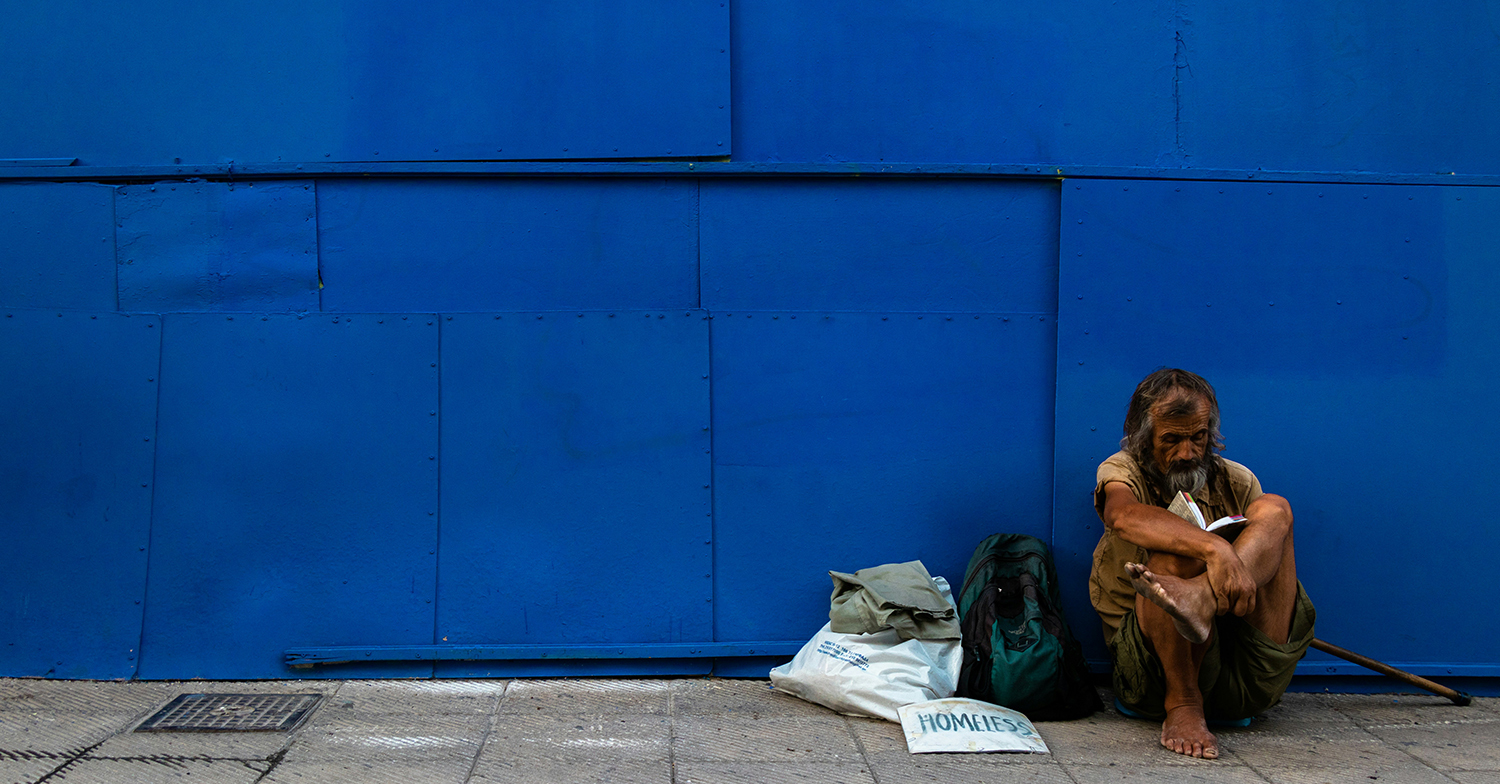
Recently Windsor city council proposed posting signs discouraging donations to individual panhandlers on the streets with the caveat that those who want to help can make donations to appropriate organisations.
In doing so, they join the plethora of municipalities that find creative ways to move the unhoused and those living in poverty farther from public view. Other tactics have included segmented benches that are uncomfortable to sleep on, harassment by police, the closure or movement of resources, and the outright removal of encampments. Time and time again, efforts are made which fundamentally treat people living in poverty as suspect, criminal, and ultimately, undeserving.
Politicians are able to sell these practices because the sight of destitute individuals makes people uncomfortable. In contrast, it can be comforting to assume the worst about them because if we can find failings with them, it is easier to make excuses about why we don’t need to help them. "Rabbi, who sinned, this man or his parents, that he was born blind?" (John 9:1)
When we can point to some fancy vehicle they leave in after a day of panhandling, we can question whether they are actually in need, ignoring the possibility that the vehicle was borrowed or a friend picked them up or that they are living in a situation where they are being exploited.
When we see their state and recognise signs of addiction, we can believe that any money we give will go to feed that addiction instead of buying food. We justify withholding money to avoid contributing to their problem, which we blame on them. We ignore the reality that addiction is an illness for which there are inadequate supports.
When we assume that they are too lazy to get the help they need…have you ever tried to access resources in your area? Did you know applicants often need to prove they are poor enough before they can access food banks? How would you feel if you had to show your last tax return, housing information, and/or HST credit information just to access a box of mediocre food that will barely last a week and are limited as to how often you can do so? Did you know there are food banks where families with multiple children are questioned because the child tax benefit increases their income beyond what the food bank considers an acceptable threshold?
Shelters can fill up quickly. Many do not necessarily feel safe at shelters. Some complain they have had their possessions stolen and have been threatened with violence while at shelters. Did you know there are issues with racism, sexism, homophobia, and transphobia at some of these spaces? Transgender youth are disproportionately represented on the streets because they don’t feel safe in the spaces that are supposed to help them.
It may be comforting to assume the worst of every person on the streets, and to make blanket statements about them. The reality is, however, that each person on the streets has a story that is complex. When we assume the worst of every single person who is struggling on the streets, our judgment may lead to a denial of dignity. In our Baptismal Covenant we commit to “…strive for justice and peace among all people, and respect the dignity of every human being.” (BAS, p.159) Jesus, in his life, death, and resurrection showed us what this looks like.
When he fed the 5000, Jesus didn’t ask for proof that they were in need. When he healed, he didn’t question who was worthy. In fact, Jesus was criticized for spending time with outcasts and sinners, those who the righteous felt were undeserving of his attention. Jesus showed us what it is like to truly respect the dignity of every human being. When faced with those whom society would prefer to be treated as unworthy today, may we follow the example of Jesus and embody the commitment we profess in our Baptismal Covenant, with God’s help.
Rev. Chris Brouillard-Coyle is a co-chair of SEJH.
Photo: Jonathan Kho/Unsplash