By Rodger Moran
WHEN I think about stewardship, the first image that comes to mind isn't an offering plate. It's my godmother, Pat.
I see her sitting beside me, with a book open between us. She's not reading to me, and I'm not reading to her. We're reading together.
And though I didn't realize it at the time, she was teaching me something far greater than how to read. She was teaching me what it means to give of yourself.
Pat had been a close friend of my parents long before I was born.
When my father died in 1983, I was not quite three years old. My brother was seven, and my sister was eight. My mother was suddenly faced with raising three young children with very little financial security.
 Pat could have remained a dear family friend. Instead, she moved into our home, helped support us financially, and raised us alongside our mother.
She never explained that decision to us, and she certainly never sought recognition for it. But knowing Pat and the way she lived her life, I can only say: of course she did.
Before I was old enough to understand generosity, I was already growing up surrounded by it.
Godmother was the word we used to describe Pat, because family friend never came close. But as we grew older, my brother, sister and I came to understand that she was so much more. She helped form us as Christians, certainly, but she was also the mother God had sent us when we needed one the most.
Faith was central to Pat's life, and she believed it was something you lived.
She served our church for years as Treasurer, bringing the offering plates home each Sunday. I would sit with her, helping to count and record the donations.
But she taught me far more than how to count money. She taught me what those gifts could make possible: children's programming, sponsoring refugee families, caring for people in need, and supporting the ministry of the Church.
And she showed me that stewardship extended far beyond the offering plate.
She welcomed newcomers to Canada, looked after children so their parents could attend job interviews, and drove people to appointments when they needed help.
Pat was quiet and reserved. She was a woman of action, not words, and she never sought recognition for her generosity.
For much of my childhood, I didn't have the words to describe what she was teaching me, either.
It was only as I grew older, deepened my own faith, and became a father myself that I began to understand: Pat had taught me what discipleship looked like long before I understood what discipleship meant.
As a child, I learned generosity by receiving it. I learned stewardship by watching Pat share what God had given her. And as my own faith grew, I came to recognize what she had really been showing me: how to follow Jesus.
She never sat me down to explain Christian discipleship. She lived it. And through her example, I learned that following Christ isn't simply something we profess on Sunday mornings. It's something we practise in how we treat people, share our gifts, and respond when someone needs us.
After Pat died, my brother, sister and I began gathering every February around the anniversary of her death. We live in three different provinces, but it's the one time each year we know we'll be together.
We miss her terribly. But we also come together to honour her by making time to be present for one another, just as she was always present for us.
That's one way her lessons continue to shape my life.
As a father, I try to lead with kindness and curiosity. When my children were little and became upset over something that seemed trivial to me, I learned to look into their eyes and recognize that what they were feeling was real, even if I didn't understand it.
Pat never taught me that particular lesson directly. But she taught me to approach others with compassion, to encourage them, and to stand beside them as they discover what they're capable of.
Her example also shapes how I serve the Church.
I prayed for the opportunity to use my professional gifts in service to God, and today I have that privilege through my work with Camp Huron. At my parish, I sing in the choir and serve as Cantor, sharing the musical gifts God has given me in worship.
These are some of the ways I try to put my faith into action as a disciple of Christ. And it was Pat who shaped my understanding of what good stewardship means: recognizing that everything God has entrusted to us, whether our time, our talents, our resources, or our capacity to love, is meant to be shared, extending God's grace to others through the way we live.
As disciples of Christ, we're not simply recipients of God's love. We're called to carry that love into the world through our own lives.
Sometimes through words, but never through words alone. And what I find so remarkable is that Pat is still teaching me those lessons today.
Her generosity didn't end with her death. It continues in the way my siblings and I care for one another, in the lessons I try to pass on to my children, and in how I seek to use what God has given me in service to others.
I often return to that image of Pat sitting beside me, reading together. And I remember watching her do the same with my own children.
I hope that when my own children look back on their lives, they'll remember not simply what I gave them, but how I loved them, encouraged them, and stood beside them.
Because that is what Pat gave me. And that is what I hope, by God's grace, to continue giving to others.
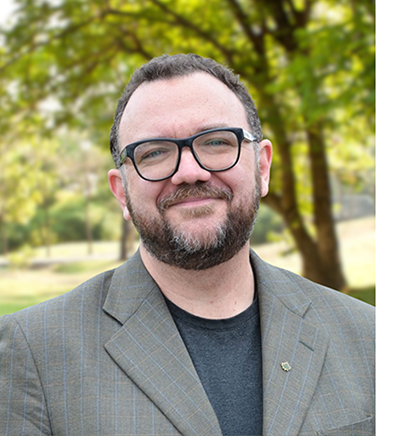
Rodger Moran is the Manager of Advancement at Camp Huron.