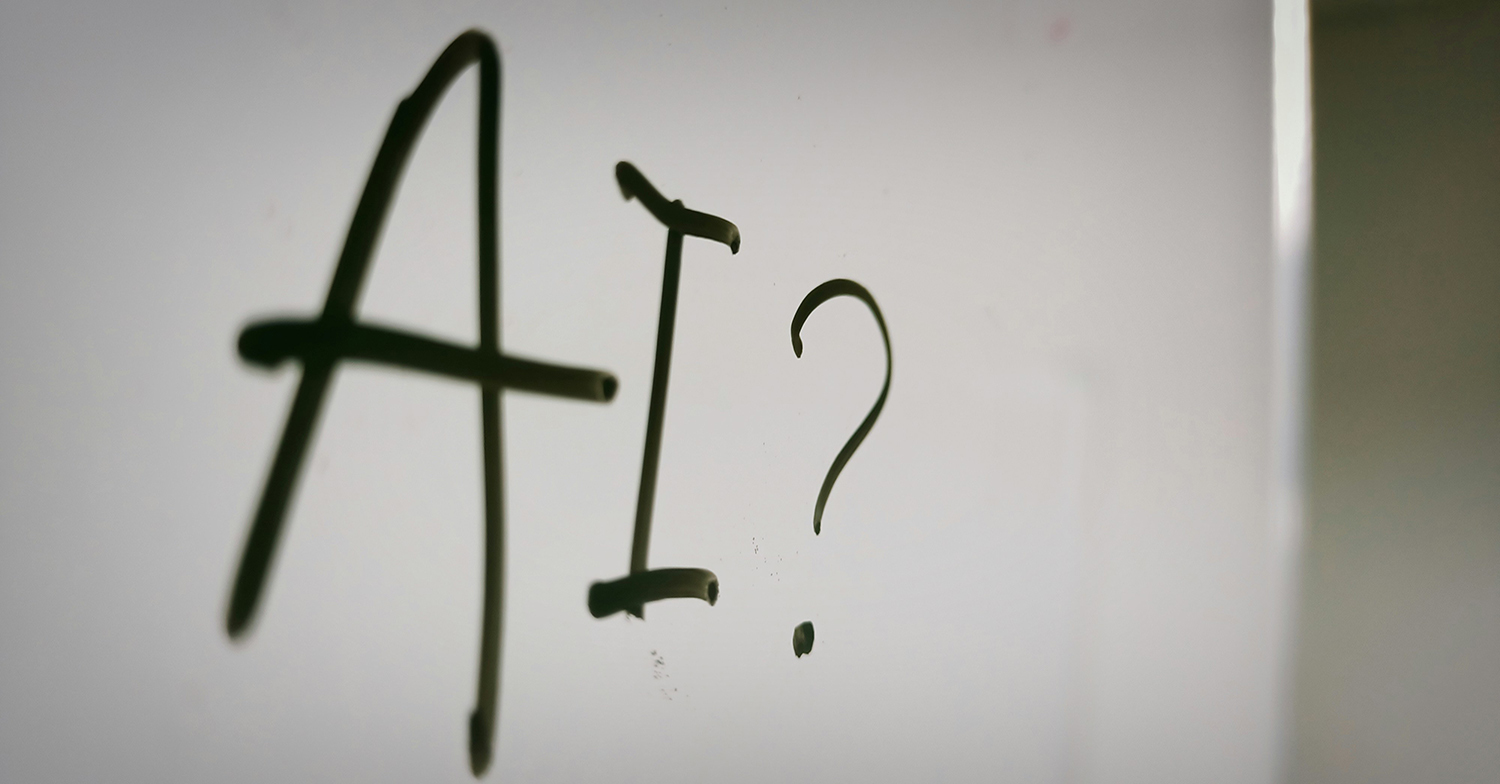
Is artificial intelligence good?

FIELD NOTES
By Rev. Allie McDougall
ARTIFICIAL INTELIGENCE, as the technology and its use unfolds, is many things.
Creatively and intellectually, it offers users a way to streamline artistic processes that have been for centuries left to the power of human skill, condense information with middling accuracy, and replicate an echo of the human voice in writing.
Educationally, the overuse and abuse of AI is pushing some teachers of all grade levels to revert to “old school” research methods, verbal examinations, and pencil-and-paper written submissions.
Environmentally, AI data centres are wreaking havoc on local water supplies and power grids, all while leaching pollutants and eating up valuable land resources.
Economically, venture capitalists and the corporate entities who own this software are making money hand over fist as the technologies that have become incorporated into daily life (e.g., search engines, smartphones, online banking, call centres, and more) adopt AI features that are becoming increasingly difficult to work around.
Socially, large language models and chatbots seem appealing to people struggling with loneliness but have been shown to stoke paranoia and affirm delusions among those with pre-existing mental illness. Entire internet communities of people reporting romantic relationships with chatbots have emerged. Sure, AI can help you produce an uncanny, visually confusing event poster in the time it takes to type out a prompt, but we must be honest about whether this technology and the speed at which it is being foisted upon us is a net-positive good for humanity.
In Scripture, the source of all goodness is God. The goodness of God is shared by the created order; all that which God has made is called good, and humans particularly, as the bearers of God’s image, are very good. We are hardwired for goodness and one of the greatest struggles of our species is to resist sin and remain in God’s goodness. Blessedly, He helps us with this burden.
Goodness is also a fruit of the Spirit, a byproduct of knowing God and being formed by the indwelling of the Holy Spirit. Goodness is a gift of grace that we can cultivate with God’s help through the lifelong process of discipleship and theosis (i.e. growing in holiness). Goodness is not merely a state of being, but has moral and ethical implications. Being good naturally progresses into doing good in the world, spreading the good to our neighbours, and revealing more of God’s character.
Criticism of AI, of which I personally engage in on a somewhat regular basis, is often met with hedging and equivocation. The most frequent responses are that the advance of AI is the inevitable endpoint of technological progress, that it makes information more accessible, and that there are some people for whom AI makes life easier. The angle of inevitability is being sold to us by the same people who stand to benefit most from the widespread adoption of AI.
There are merits to the claims made about access and ease, but if access and ease come at the cost of what it means to be human, to rely on others and form community care, to struggle through a problem and overcome it using our God-given creative powers, or to circumvent legitimate measures that must be taken to rehabilitate inaccessible institutions or knock down barriers, then the benefits are shallow and fleeting.
God’s perfect being is the source of all goodness and human goodness is honed and harmonized with God’s when we are fully ourselves, when we are living as God intended us to, not distracted by the digital world or outsourcing our intellect to a machine that does not bear God’s image.
One of the du jour theological debates centres around this very question but my contention is that AI, although a product of humanity’s effort, is at best a homunculus of our own creation that exists in the non-real digital space: it cannot bear the fullness of God’s image. Furthermore, AI’s excesses are driving people further into this environment of artifice and away from the protection of nature and the raw beauty of interpersonal relationships, and, distressingly, towards creative and intellectual alienation.
If you are fond of AI and feel challenged by what I have written, please don’t receive this reflection as judgement. Receive it instead as an invitation to consider whether your use of AI brings you into deeper alignment with the good creation God has made you to be, in the world He has so graciously gifted us as our temporary home. Consider who stands to gain the most from the normalization of this technology and what it means for those who operate the levers of power. If the deposit of lived Christian witness from the time of Christ to today can show us anything, it is that human existence is not meant to be frictionless, automated, or isolated. Our goodness is perfected as we know our Creator and live abundantly, communally, and creatively with the fullness of our being oriented to His own, made known to us in Jesus Christ.
Rev. Allie McDougall is Rector of St. Mary's Walkerville.